
For many women, the journey toward pregnancy is smooth and uncomplicated. However, for others, repeated miscarriages or difficulty conceiving can be emotionally challenging and leave them searching for answers. While hormonal disorders, ovulation problems, and lifestyle factors are well known causes of fertility issues, structural abnormalities of the uterus can also play a significant role. One such condition is a uterine septum, a congenital abnormality that often remains undetected until a woman experiences fertility problems or pregnancy loss.
A uterine septum is one of the most common congenital uterine anomalies. Because it develops before birth, many women are unaware they have this condition until they undergo investigations for infertility or recurrent miscarriage. Fortunately, modern diagnostic techniques allow gynecologists to identify a uterine septum accurately, and effective treatment can significantly improve reproductive outcomes for many women.
Understanding how a uterine septum affects fertility and pregnancy can help women seek timely evaluation, make informed decisions, and receive appropriate care. Early diagnosis is often the key to reducing complications and supporting a healthy pregnancy.
A uterine septum, also known as a septate uterus, is a congenital condition in which a band of fibrous or muscular tissue divides the inside of the uterus partially or completely. Instead of having one open uterine cavity, the cavity is separated by a central wall called the septum.
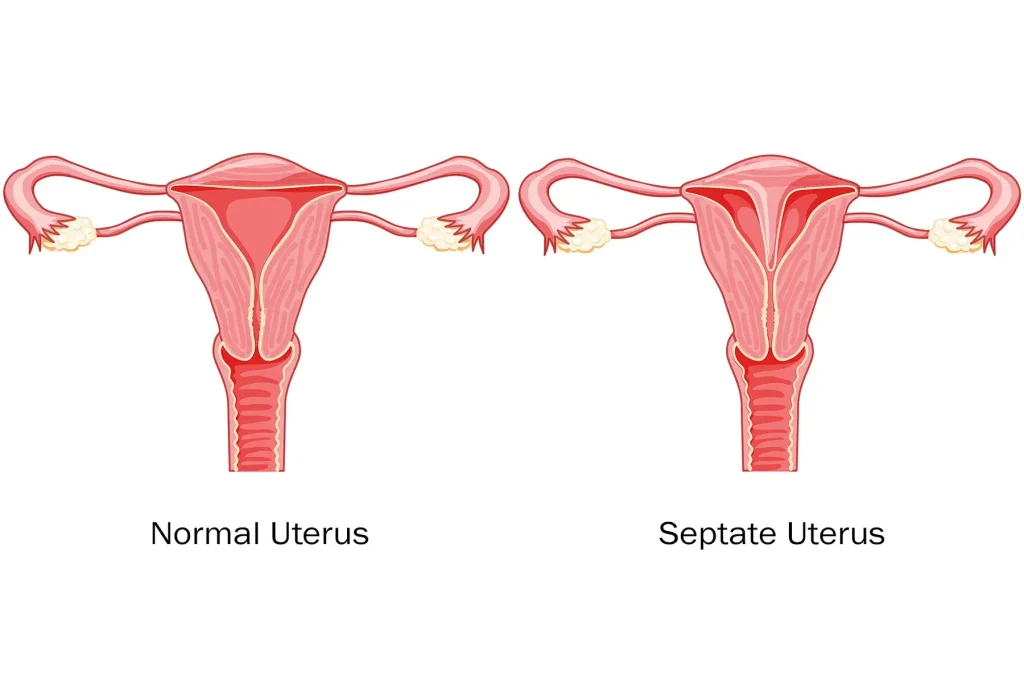
This condition develops while a baby girl is still in her mother’s womb. During fetal development, two structures known as the Müllerian ducts normally fuse together to form a single uterine cavity. When the tissue between these ducts does not dissolve completely, a septum remains inside the uterus.
The size of the septum varies considerably. Some women have a small partial septum that affects only the upper portion of the uterus, while others have a complete septum extending toward the cervix. The severity of symptoms and reproductive impact often depends on the size and location of the septum.
Although many people have never heard of this condition, a uterine septum is one of the most frequently diagnosed congenital uterine abnormalities.
Many women never experience symptoms and only discover the condition during fertility investigations or imaging performed for unrelated gynecological concerns. Because it often goes unnoticed for years, the actual number of women living with a uterine septum may be higher than previously estimated.
The condition can affect women of all backgrounds and is present from birth. It is not caused by lifestyle choices, infections, or anything a woman does later in life.
Unlike many gynecological conditions that develop over time, a uterine septum forms during fetal development. As the reproductive organs develop, the two Müllerian ducts merge to create the uterus. Normally, the dividing tissue between them gradually disappears, leaving one spacious uterine cavity.
When this natural process is incomplete, a septum remains inside the uterus. Researchers continue to study why this occurs, but it is generally considered a developmental variation rather than an inherited disease.
Importantly, nothing a woman does during childhood or adulthood causes a uterine septum to develop. It is a congenital condition that has simply remained unnoticed until later in life.
Many women with a uterine septum have no obvious symptoms and continue to experience regular menstrual cycles. Others may notice subtle reproductive issues that only become apparent when trying to conceive. Possible symptoms include:
Because these symptoms overlap with many other reproductive conditions, imaging studies are often needed to confirm the diagnosis.
One of the biggest concerns surrounding a uterine septum is its impact on fertility. Interestingly, many women with this condition are able to conceive naturally. The greater challenge often occurs after conception rather than before it.
The septum usually has a poorer blood supply than the normal uterine wall. If a fertilized egg implants onto the septum instead of healthy uterine tissue, the pregnancy may not receive adequate nourishment. This increases the likelihood of early pregnancy loss.
A uterine septum may also reduce the available space inside the uterus, potentially affecting fetal growth or positioning during pregnancy. While not every pregnancy is affected, the condition is considered an important risk factor in women with recurrent miscarriage. Fortunately, appropriate treatment can significantly improve pregnancy outcomes for many patients.
Although many women with a uterine septum deliver healthy babies, certain pregnancy complications occur more frequently. Potential risks include:
It is important to remember that these complications do not occur in every pregnancy. Regular prenatal care and appropriate obstetric monitoring help reduce risks and support a healthier pregnancy.
Because symptoms alone cannot confirm a uterine septum, diagnostic imaging plays a central role. After reviewing a woman’s medical history and reproductive concerns, a gynecologist may recommend one or more investigations.
A transvaginal ultrasound is often the first imaging study performed. It provides valuable information about the shape of the uterus and may suggest the presence of a septum.
Three dimensional ultrasound offers a more detailed view of the uterine cavity and is highly effective in distinguishing a uterine septum from other uterine abnormalities.
Magnetic resonance imaging provides detailed visualization of the uterus and surrounding pelvic organs. It is particularly useful when the diagnosis remains uncertain.
Hysteroscopy involves inserting a thin camera through the cervix to directly examine the inside of the uterus. It not only confirms the diagnosis but may also be used during treatment. Accurate diagnosis is essential because different uterine abnormalities require different management strategies.
Treatment depends on whether the condition is causing reproductive problems. Women who have no symptoms and no history of infertility or miscarriage may not require immediate treatment. Instead, they may simply undergo regular monitoring. For women experiencing recurrent pregnancy loss or fertility challenges, surgery may be recommended.
The most common treatment is hysteroscopic septum resection, a minimally invasive procedure performed through the cervix without external incisions.
Using specialized instruments, the gynecologist carefully removes the septum, creating a single uterine cavity. Because the procedure avoids abdominal surgery, recovery is usually quicker and postoperative discomfort is generally minimal.
Numerous studies have shown improved pregnancy outcomes following successful septum removal in appropriately selected patients.
Yes. Many women with a uterine septum go on to have successful pregnancies, particularly after receiving appropriate evaluation and treatment.
Every woman’s situation is unique. Factors such as age, overall reproductive health, fertility status, and the size of the septum all influence pregnancy outcomes.
For women who have undergone corrective treatment, pregnancy is typically monitored carefully to ensure healthy fetal development and to identify any complications early.
Regular prenatal visits, ultrasound monitoring, and expert obstetric care all contribute to achieving the best possible outcome.
While some women discover a uterine septum during routine imaging, others seek medical attention because of reproductive concerns. You should consult a gynecologist if you experience:
Early evaluation allows structural abnormalities to be identified before they continue affecting reproductive health.
Structural abnormalities of the uterus require careful evaluation because they can significantly influence fertility, pregnancy, and overall reproductive health. Dr. Namrata Jadhav provides comprehensive assessment and management of congenital uterine conditions, including uterine septum, using a personalized and evidence based approach.
Her evaluation begins with understanding each woman’s medical history, fertility goals, and previous pregnancy experiences before recommending appropriate diagnostic investigations. By combining advanced imaging with individualized treatment planning, she helps patients understand their condition and make informed decisions about their reproductive future.
With extensive experience in infertility evaluation, recurrent pregnancy loss, minimally invasive gynecological procedures, and high risk pregnancy care, Dr. Namrata focuses on identifying the underlying cause of reproductive challenges while providing compassionate guidance throughout every stage of treatment. Her patient centered approach ensures that women receive clear information, expert care, and ongoing support as they work toward achieving a healthy pregnancy.
Although a uterine septum cannot be prevented because it develops before birth, women can take several steps to protect their reproductive health and improve pregnancy outcomes. These include:
Being proactive about reproductive health allows many underlying conditions to be diagnosed earlier, improving the chances of successful treatment and healthier pregnancies.
A uterine septum is one of the most common congenital uterine abnormalities, yet many women remain unaware they have it until they experience infertility or recurrent pregnancy loss. Although the diagnosis can feel overwhelming, it is important to remember that effective treatment is available, and many women go on to achieve healthy pregnancies after appropriate care.
Understanding the symptoms, recognizing when to seek medical advice, and obtaining an accurate diagnosis are essential steps toward protecting reproductive health. Modern diagnostic tools and minimally invasive treatments have transformed the outlook for women with this condition, offering renewed hope for successful conception and pregnancy.
If you have experienced repeated miscarriages, unexplained infertility, or concerns about your uterine health, consulting an experienced gynecologist can help identify the underlying cause and guide you toward the most appropriate treatment plan. Early evaluation and personalized care can make a meaningful difference in your reproductive journey.